BABY
When Can Visitors See a Newborn? How to Welcome Guests Safely
Loved ones may be counting down the days until they can meet your bub, but don’t fling open those doors just yet.

Written by
Happiest Baby Staff
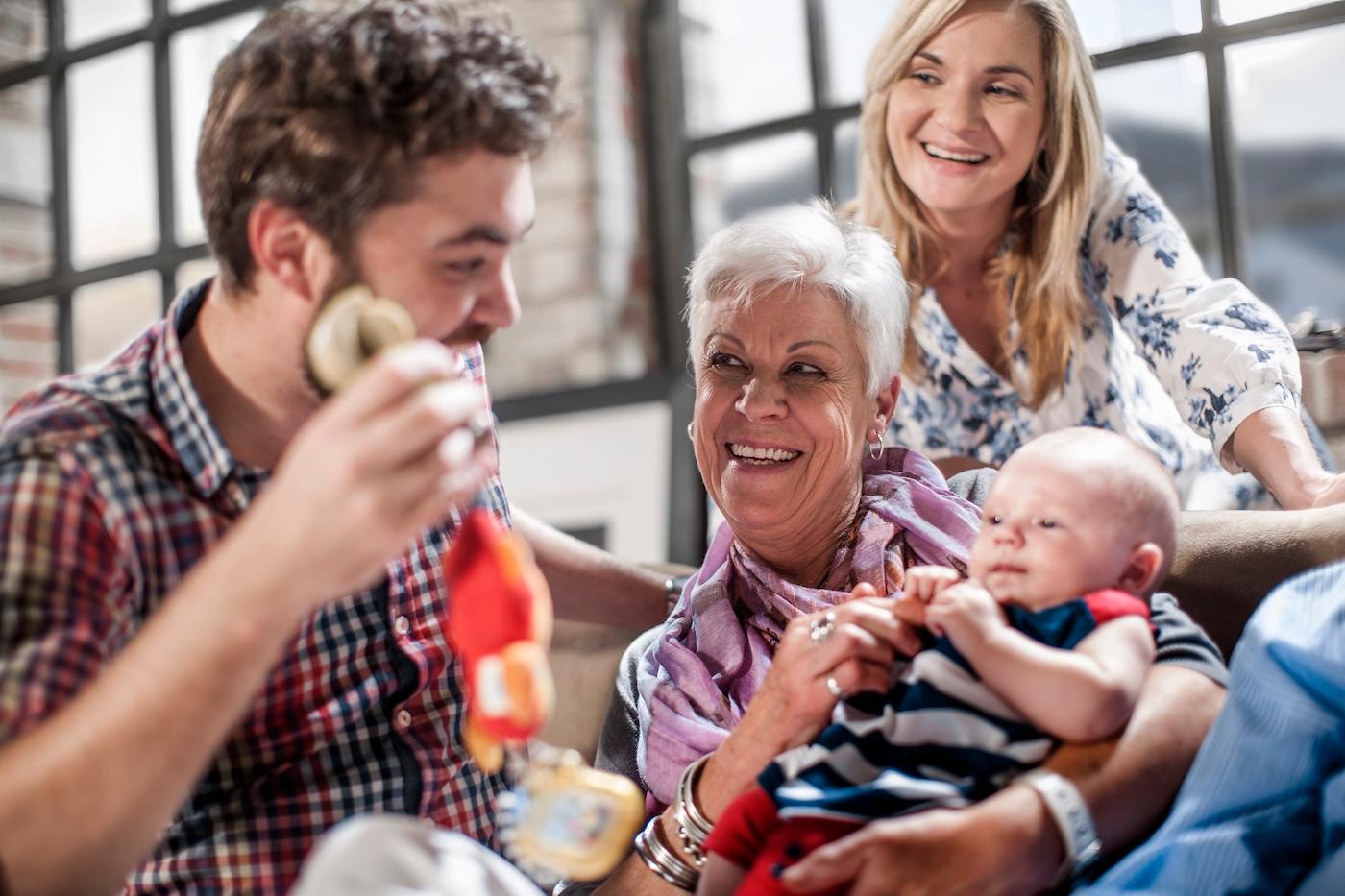
Grandparents are counting down the days. Your best friend has a gift bag ready. Your neighbour has already asked if she can drop round a lasagne…and maybe sneak a peek. It's wonderful to have so many people excited to meet your little one! But between feeds, healing and the fog of newborn sleep, it's natural to wonder: When is it safe to let visitors around my baby? And what should I ask of them when they come?
While you don't need to barricade your doors for months, it is a good idea to have a bit of a game plan. Here's what child health experts recommend for welcoming visitors while keeping your newborn healthy—and keeping your own sanity intact.
When can visitors see a newborn?
Think of the first two to three months of a baby's life as a time for extra care. Here's why:
- Babies can't have their first whooping cough vaccine until they're about 2 months old. In the UK, it's given at 8 weeks. In Australia, it's due at 2 months but can be given from 6 weeks. Until then, newborns rely on protection passed along during pregnancy and on the people around them.
- Babies younger than 6 months are too young for a flu vaccine, yet they're at high risk of serious flu complications.
- A temperature of 38°C or higher in a baby under 3 months needs urgent medical attention. Call your GP or head to the emergency department. That's true even if your baby seems otherwise fine, because doctors need to rule out a serious infection. In other words, a "simple cold" picked up from a visitor can quickly turn into a trip to the GP or A&E.
That doesn't mean "no visitors." It means thoughtful visitors: healthy, vaccinated, clean-handed people who understand that, for now, your baby's health comes first. If your baby was born prematurely or has a heart, lung or immune condition, talk to your GP, midwife or health visitor (in Australia, your child and family health nurse) before welcoming guests, since these babies can be more vulnerable to infections like RSV.
Why are newborns so vulnerable to germs?
Newborns don't yet have fully developed immune systems, which makes them particularly vulnerable to infections. Their bodies simply haven't learnt how to recognise and fight off most germs yet—and they're still too young for many of the vaccines that would help them do that.
That's why it helps to build a protective bubble around your newborn. Everyone who spends time with your baby works together to keep germs out—by staying up to date on vaccines, practising good hygiene and staying away when they're sick. Think of it as a bubble built by the people who love your baby most.
Visitor Ground Rules
Ask visitors about their vaccines before they visit.
Vaccines are one of the most powerful ways your loved ones can protect your baby. Here's what to ask about:
- Whooping cough (pertussis) vaccine: The most important protection comes from the whooping cough vaccine in pregnancy, which is offered in every pregnancy in both the UK and Australia. In Australia, adults who live with or care for a baby under 6 months—like partners and grandparents—are also advised to have a whooping cough booster at least two weeks before close contact if their last dose was more than 10 years ago. In the UK, boosters aren't routinely offered to adults, so visitors who are unsure can ask their GP or pharmacist. Kids who aren't up to date on their routine vaccinations should catch up.
- Flu vaccine: A yearly flu vaccine is a good idea for anyone who'll spend a lot of time with your baby—parents, siblings, grandparents, babysitters and nannies.
It takes about two weeks for the body to build antibodies after a vaccine, so visitors who need a whooping cough or flu vaccine should have it at least two weeks before meeting your baby.
Whooping cough deserves special attention. It spreads through coughing and sneezing and can be deadly for newborns. Plus, older kids and adults with whooping cough may have such mild symptoms that they have no idea they're contagious. Handwashing alone isn't enough to keep babies safe, so making sure household contacts like siblings, grandparents and carers are vaccinated adds an important layer of protection.
What about RSV? Respiratory syncytial virus (RSV) is especially risky for the youngest babies—the younger the baby, the higher the risk of severe illness. Both the UK and Australia offer an RSV vaccine in pregnancy, from 28 weeks, to protect babies from birth. In Australia, babies who aren't protected by the pregnancy vaccine, and some higher-risk babies, can have an RSV antibody injection called nirsevimab; eligibility varies by state. In the UK, that injection is offered only to eligible high-risk or very premature babies. Ask your midwife or GP which option makes sense for your family.
Sick visitors should wait.
Grandparents, babysitters and other loved ones should let parents know when they're feeling under the weather—and hold off on visiting until they're well again. A runny nose, cough, sore throat, fever or stomach bug in an adult can be far more serious for a newborn.
Wash up before holding the baby.
Ask every visitor to wash their hands before touching your baby. Washing with soap and water is the best way to get rid of germs in most situations. If a sink isn't handy, hand sanitiser with at least 60% alcohol is a good backup, though it doesn't work as well when hands are visibly dirty or greasy. Tip: Keep a pump bottle by the front door so it's the first thing guests see. (Just store it out of reach of curious older siblings.)
Save the smooches.
Those squishy cheeks are very tempting. But kissing is an easy way to pass germs to a baby. Cold sores, in particular, are caused by the herpes simplex virus (HSV), which spreads through saliva, skin-to-skin contact and even shared objects. While HSV is usually harmless for older kids and adults, it's dangerous for babies under 6 months old—especially newborns. A good house rule: Shower Baby's feet and the top of their head with love…but keep lips away from their face and hands.
Keep your baby's air smoke- and vape-free.
There is no safe level of exposure to tobacco smoke—and that includes "thirdhand smoke," the residue that clings to hair, clothing, furniture and car seats long after a cigarette is put out. Babies can breathe in these chemicals simply by being held by someone who smokes.
That means:
- Don't allow smoking in your home or car.
- Don't allow smoking near your baby.
- Don't let anyone vape in your home, car or near your child.
- Ask carers to follow these rules—and explain why.
Smoking in another room, by an open window or with a fan running does not prevent thirdhand smoke exposure. If a visitor smokes, it's perfectly reasonable to ask them to hold off on holding your little one.
What about older siblings and little visitors?
Big brothers and sisters are often the most excited visitors of all! But young kids are also pro germ collectors. In fact, when researchers in a large US study tracked down the source of whooping cough infections in babies, most turned out to be immediate family members—and siblings were the most common source (about 36% of cases where a source was identified), followed by parents.
That's not a reason to keep siblings away from their new brother or sister. It's a reason to make sure older kids are up to date on their vaccines and to set a few simple rules—like gently reminding young children not to kiss the baby or get too close, especially if they're coughing. Keep an eye out for illness alerts from nursery, childcare or school, have kids wash their hands as soon as they get home and let them show their love with foot kisses or a gentle tummy pat.
For visiting kids who aren't part of your household, it's OK to wait until your baby is a little older or to ask that they admire your peanut from an arm's length or so.
How to Protect Your Recovery and Your Baby's Calm
The first weeks with a newborn are a time of healing, feeding around the clock and very little sleep. To a newborn, even a peaceful home can feel overwhelming, which is one reason a revolving door of guests can leave little ones (and their parents!) frazzled.
A few ways to keep visits restorative:
- Keep visits short: An hour is plenty in the early weeks. You can always invite people back.
- Stagger guests: One or two visitors at a time is easier on everyone than a crowded lounge room.
- Put helpers to work: Support from family and friends matters as you adjust to night waking and feeds. The best visitors fold washing, walk the dog, drop off a meal or watch the baby while you nap or shower.
- Feed however and wherever you're comfortable: If you want privacy for feeding, it's OK to excuse yourself—or end the visit.
- Watch your baby's cues: If your lovebug is getting fussy or overstimulated, it's time for some quiet.
And if you find yourself dreading every knock on the door, feeling persistently sad, anxious or overwhelmed, or just not like yourself, tell your GP or midwife. Those feelings can be signs of postnatal depression, and help is available.
How to Set Visitor Boundaries
If you're finding it tricky to tell loved ones "not yet" or "please wash your hands first," take a look at these tips:
Set expectations before your baby arrives.
A quick group message or email, sent before or just after the birth, takes the pressure off in-the-moment conversations. It can help to frame your visitor rules as the best way loved ones can support your family right now. You might try something like:
"We can't wait for you to meet the baby! To keep our little one healthy during these first few months, we're asking everyone who visits to check they're up to date on their vaccines (ideally at least two weeks before visiting), to stay home if they're even a little bit unwell and to wash their hands when they arrive. Thanks so much for helping us keep our sweet pea safe!"
Blame the doctor.
"Our GP and midwife want us to be extra careful for the first couple of months" is a simple, hard-to-argue-with line.
Designate a gatekeeper.
Ask your partner, a parent or a close friend to handle scheduling and to send gentle reminders, so you don't have to.
Offer alternatives.
Video calls, photos and doorstep drop-offs let people share the joy without a full visit.
Remember: It's temporary.
The rules can relax as your baby gets older, gets their own vaccines and as you find your feet. Your GP can help you decide when.
Disclaimer: The information on our site is NOT medical advice for any specific person or condition. It is only meant as general information. If you have any medical questions and concerns about your child or yourself, please contact your health provider. Breastmilk is the best source of nutrition for babies. It is important that, in preparation for and during breastfeeding, mothers eat a healthy, balanced diet. Combined breast- and bottle-feeding in the first weeks of life may reduce the supply of a mother's breastmilk and reversing the decision not to breastfeed is difficult. If you do decide to use infant formula, you should follow instructions carefully.
SHARE THIS ARTICLE
PARENT PICKS
Bestsellers