TODDLER
Fever and Vomiting in Toddlers
Yikes! Here’s what to do when your feverish little one is vomiting, too.

Written by
Happiest Baby Staff

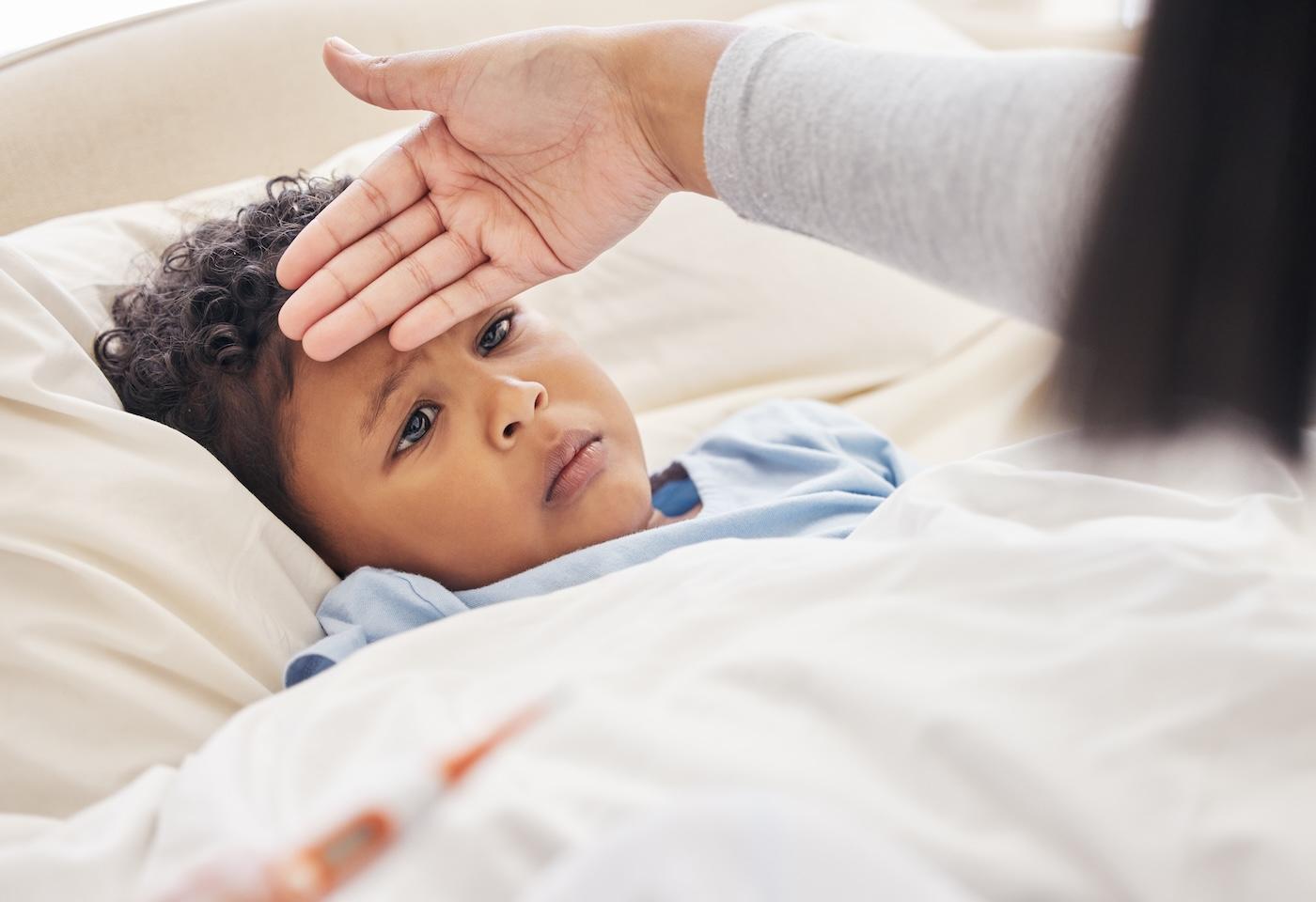
One of the hardest parts of being a parent is caring for your little one when they’re sick. Not only can vomiting and fever scare your toddler…it can leave even the most competent and confident parent a nervous wreck! The good news? Most of the time fever and vomiting can be safely and easily treated at home with rest and fluids.
What causes vomiting in toddlers?
There are so many reasons your child might be throwing up. But one of the most common culprits is something called gastroenteritis. While many folks call gastroenteritis a “stomach bug” or the “stomach flu,” it actually has nothing to do with influenza, which only affects the respiratory system. Instead, gastroenteritis is a tummy infection caused by a virus, like rotaviruses and enteroviruses, bacteria, or parasites.
With this nasty sickness, vomiting is usually one of the earliest symptoms, followed by watery, loose stool (aka diarrhea) within 12 to 24 hours. At times, a fever jumps in, too. Most of the time, vomiting subsides in less than 24 hours, while other symptoms tend to hang on for a few days. Acute gastroenteritis accounts for an estimated 2.7 million visits to health professionals a year in Australia. And a large proportion of these cases occur in children (kids under 5 account for 13.9% of cases!). Other offenders include:
- Food poisoning. This can come on within one to 48 hours after eating the offending food. At times, fever occurs, too. (The easiest way to determine if food poisoning is behind your child’s vomiting is if others who ate the same food have the same symptoms.)
- Migraine headache. About 80% of young children who suffer from migraines have accompanying nausea or vomiting.
- Motion sickness. Car rides, boat rides, amusement park rides, and more can cause dizziness and vomiting in roughly 1 in 3 people. And because motion sickness has a genetic component, if riding the tilt-a-whirl makes you queasy…chances are it may nauseate your kiddo, too.
- Food allergies or intolerances. This is another cause of vomiting that can come on quickly after eating. Some of the most common food allergy triggers include eggs, nuts, and seafood.
- Some medications. Certain medications, such as antibiotics and ibuprofen can cause vomiting in some children, especially if taken on an empty stomach. Plus, forcing a struggling child to take any medicine can lead to vomiting.
What if your toddler is vomiting and has a fever?
Having a toddler who’s vomiting is taxing enough. Toss a fever into the mix and worry surges! But if your child is vomiting and then develops a fever (or vice versa), it’s usually not a reason to become alarmed. Many times, the fever-vomiting combo means that your child has the stomach flu (gastroenteritis), though fever can accompany some cases of food poisoning, too. Most of the time, you can take steps at home to help manage both the vomiting and fever. There are exceptions, though.
If your toddler’s temperature ekes above 40 degrees Celsius, contact your child’s paediatrician. For babies younger than 12 weeks, the call-the-doc threshold lowers to 38.0 degrees Celsius. (More on when to reach out to the doctor, below.)
Are there any complications to vomiting?
Yes! One of the biggest complications of frequent vomiting to look out for is dehydration. In fact, most cases of dehydration in children are the result of acute gastroenteritis. Essentially, dehydration is when your child loses more fluids, salts, and minerals than they’re taking in. (Infants and children are more vulnerable to dehydration than grownups because they have a higher surface area to volume area. Plus, children lose more fluids from a high fever than adults.) While vomiting itself can cause dehydration, vomiting and fever together can bring on dehydration faster. Some signs your baby or big kid may be dehydrated include:
- Dry mouth
- Cracked lips
- Fewer than six wet nappies a day for infants
- No wet nappies or urination for eight hours in toddlers
- Crying with little to no tears
- Dizziness
- Plays less than usual
- Sunken soft spot in an infant or toddler
- Very fussy
- Increased sleepiness
- Deep, rapid breathing
- Sunken eyes
- Cool and discoloured hands and feet
- Wrinkled skin
How to help a child who’s vomiting—with or without a fever:
In most cases, your kiddo’s vomiting spell will stop without specific medical treatment. But that doesn’t mean you shouldn’t do anything to help your child! When your little one is vomiting, your biggest goal should be to prevent them from getting dehydrated. Severe dehydration is serious, even life-threatening. Beyond preventing and treating dehydration, you’ll also want to simply soothe your little. Here, how to do both:
- Rest this way. Encourage your toddler to lay on their tummy or side as much as they can. This position will minimise the chances of accidentally inhaling vomit into the upper airway and lungs. (Babies under a year old should still remain on their back for all sleeps.)
- Offer small sips. Toddlers and big kids who are vomiting can’t take big gulps of water. Instead, offer 1 to 2 tablespoons of plain water, ice chips, clear, broth, or an electrolyte (aka oral rehydration) solution every 15 to 20 minutes. (Homemade electrolyte ice pops work, too.) Since water is not quite right for babies, offer shorter, but more frequent nursing session. And ask your child's doc about offering 1 tablespoon of an oral electrolyte solution every 15 to 20 minutes. For formula-fed babies, check in about giving 1 to 2 tablespoons of an electrolyte solution every 15 minutes for two to three hours.
- Wait 20 minutes. Give fluids every 15 to 20 minutes for the next few hours, gradually increasing the amount you offer. If your toddler vomits again, go back to small sips every 30 to 60 minutes.
- Avoid dairy. Dairy products can irritate the stomach and prompt puking again, so steer clear of them until the vomiting has stopped for at least eight hours.
- Sidestep solids. Don't pressure your child eat solid food if they don’t want to. It's more important that they remain hydrated right now. But, if it’s been six to eight hours since the last bout of vomiting, you can offer some bland foods such as toast, crackers, or dry cereal.
- Don’t jump to medicate. You should never give OTC or prescription vomiting or nausea remedies to your little one unless they’ve been recommended by your paediatrician for this particular illness. If your child has a fever as well—and is more than 6 months old—they likely don’t need to a fever-reliever either…unless they’re uncomfortable. (Learn about selecting the right medication for your child.) And remember, if your child’s temperature climbs above 40 degrees Celsius, contact your child’s paediatrician. (That’s 38.0 degrees Celsius for babies younger than 12 weeks old.)
When should you call the doctor about toddler vomiting?
You can, of course, give your provider a ring whenever you are concerned. But if your child experiences any of the following symptoms along with vomiting, seek emergency care:
- Very forceful (aka: projectile) vomiting
- Black or bloody stools
- Vomit contains blood, dark brown coffee ground-like particles, or is bright green
- Severe headache
- Severe abdominal pain or cramping
- Severe belly swelling
- Neck stiffness
- Difficulty or fast breathing
And you should call the paediatrician sooner rather than later if…
- Vomiting has worsened
- Can’t keep any clear liquids down
- Vomiting persists for more than 12 hours in infants, more than 24 hours in children under age 2, or more than 48 hours in children 2 years old and older
- Diarrhea
- Recently started a new medication
- Signs of dehydration
- Fever over 40.0 degrees Celcius—or your baby under 3 months old has a fever over 38.0 degrees Fahrenheit
- Fever lasts for more than 24 hours in a tot younger than 2—or for more than 3 days in older kids.
- Persistent stomach or back pain
- Underlying condition, such as cancer, that makes them more susceptible to other illness
Bottom Line: Fever and Vomiting in Children
It can be scary when your tyke is vomiting…especially if they have a fever! But if their vomiting is caused by a short-term infection or foodbourne illness, know that all the ickiness should resolve in two to three days and your sweet nugget will make a full recovery. That said, it’s much better to be safe than sorry. Don’t hesitate to let your provider know if you have questions.
More on Common Childhood Illnesses:
***
REFERENCES
- Nemours Children’s Health, KidsHealth: Gastroenteritis (Stomach Flu)
- Seattle Children’s Hospital: Vomiting With Diarrhea
- Gastroenteritis in Children. American Family Physician. February 2019
- American Academy of Pediatrics (AAP): Food Poisoning & Contamination: Information for Families
- Seattle Children’s Hospital: Headache
- MedlinePlus: Motion sickness
- The American College of Allergy, Asthma & Immunology: Nausea and Vomiting
- Consumer Reports: Antibiotic Side Effects in Children: What Every Parent Should Know
- Mayo Clinic: Ibuprofen (Oral Route)
- Seattle Children’s Hospital: Medicine - Refusal to Take
- Centers for Disease Control and Prevention (CDC): Food Poisoning Symptoms
- StatPearls: Pediatric Dehydration
- Mayo Clinic: Dehydration
- AAP: Signs of Dehydration in Infants & Children
- Cleveland Clinic: Dehydration and Your Child
- AAP: Treating Vomiting
- Nemours Children’s Health, KidsHealth: How to Handle Vomiting
- Nationwide Children’s: Vomiting
- Cleveland Clinic: Why Your Child Vomits — and When to See a Doctor
- AAP: Treating Your Child’s Fever
- Mayo Clinic: Symptom Checker, Nausea or vomiting in children
- Factors Associated With Severe Gastrointestinal Diagnoses in Children With SARS-CoV-2 Infection or Multisystem Inflammatory Syndrome. JAMA Network Open. December 2021
- Nationwide Children’s: Fever
- UNC Health Talk: How to Help When Your Child Is Vomiting
Disclaimer: The information on our site is NOT medical advice for any specific person or condition. It is only meant as general information. If you have any medical questions and concerns about your child or yourself, please contact your health provider. Breastmilk is the best source of nutrition for babies. It is important that, in preparation for and during breastfeeding, mothers eat a healthy, balanced diet. Combined breast- and bottle-feeding in the first weeks of life may reduce the supply of a mother's breastmilk and reversing the decision not to breastfeed is difficult. If you do decide to use infant formula, you should follow instructions carefully.


SHARE THIS ARTICLE
PARENT PICKS
Bestsellers